
Phoenix (STN) – Four of the Valley’s leading providers in the fight against homelessness have launched a new collaboration aimed at addressing the rising rate of homelessness across the Greater Phoenix area.
Through a coordinated effort from UMOM, Central Arizona Shelter Services (CASS), A New Leaf, and Keys to Change, the newly formed Arizona Shelter Network will work to better coordinate shelter placements, reduce gaps in the system, and protect existing shelter capacity.
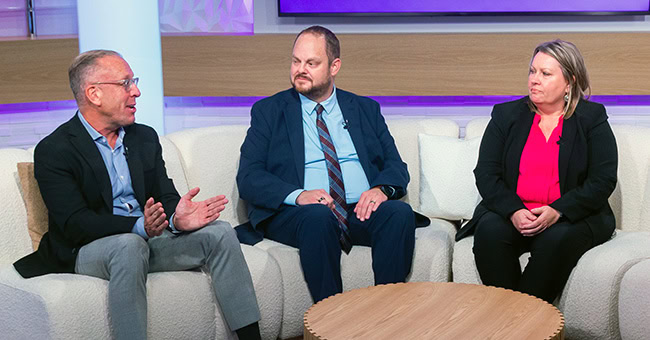
Details of the collaboration, which was announced in late January, were the subject of the ‘McQuaid Mission’ segment of the February episode of ‘It Happens at STN,’ where Keys to Change CEO Amy Schwabenlender offered an unfiltered summary of the network’s purpose.
“It’s to get s— done,” Schwabenlender said.
She explained that the urgency behind the collaboration was driven by what providers refer to as the “ARPA cliff,” the loss of pandemic-era funding that forced shelters across the region to close beds even as homelessness continued to rise. “Homelessness continues to increase,” she said, while the network’s long-term goal is to add capacity so anyone facing a housing crisis can access “a safe indoor space to sleep at night.”
WATCH: Providers unite to protect shelter capacity and move faster together
Kathy DiNolfi, chief program officer at A New Leaf, said the Arizona Shelter Network stood apart from past collaborations because of its intentional design and accountability. “The key here is the intentionality and the data-driven results,” she said, describing a model built on shared problem-solving, shared learning, and coordinated action across agencies.
Richard Crews, director of strategic impact at Keys to Change, outlined how the network plans to move the needle even without immediately adding new beds. “We want to make sure that where there are empty beds, we’re identifying those beds and asking how do we make sure they get filled,” he said. By reducing length of stay and improving coordination, Crews said providers could “use the beds better” and serve more people with the capacity already in place.
The conversation closed with a broader vision for the network’s future. DiNolfi emphasized that the Arizona Shelter Network was designed to grow beyond Maricopa County. “We’re called the Arizona Shelter Network because our intention is to reach out across the rest of Arizona and ask providers to join us,” she said.
For the leaders on stage, the message was clear. Solving homelessness will require fewer silos, more trust, and providers willing to act together with urgency and purpose.