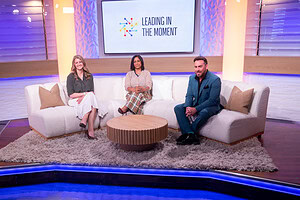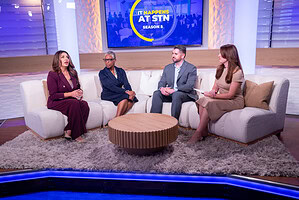
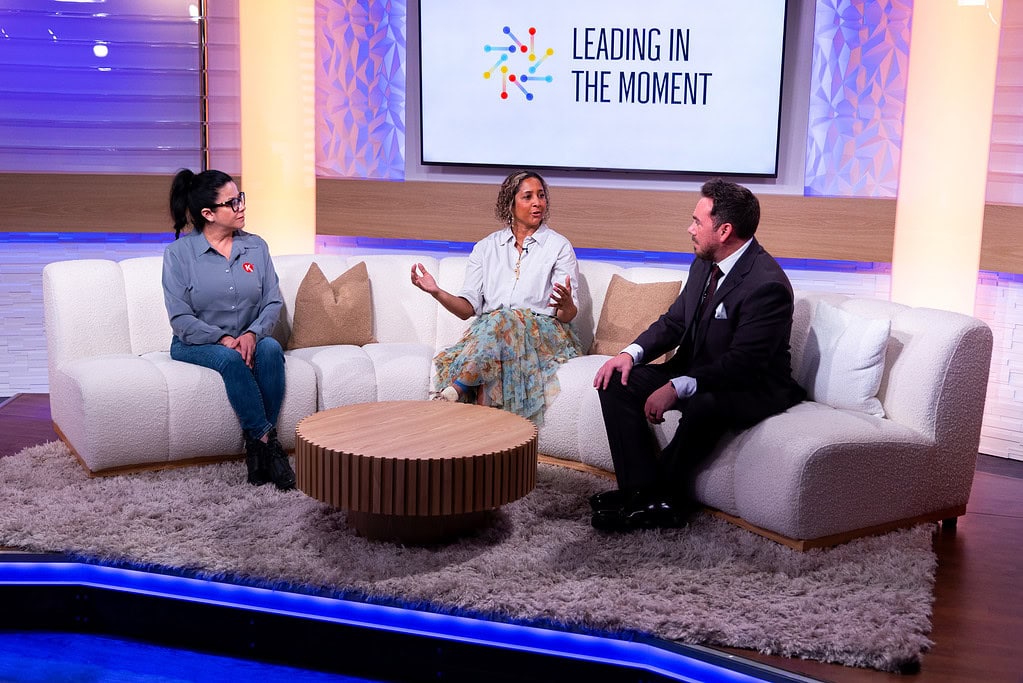
Phoenix (STN) – Money is important, but partnerships built solely around exchanging checks are no longer enough. That was the message of the February installment of ‘Leading in the Moment‘ during the latest episode of ‘It Happens at STN.’
Newly named UMOM CEO Monique Lopez opened the conversation by drawing a clear distinction between transactional support and relationships designed to endure uncertainty. “Money does work,” Lopez said. “But when a relationship is deeper than a check or a photo on LinkedIn, it can carry you through the hardest times.”
Lopez pointed to UMOM’s decades-long partnership with Circle K as a model for what transformational support looked like in practice. Beyond financial backing, Circle K had shown up through workforce development, employee engagement, and a shared commitment to the people UMOM served.
WATCH: When partnerships move beyond the check
“When you’re thinking through big problems in your organization, a partner who truly knows you can make the greatest impact for the people you serve,” Lopez said. “Those relationships matter more than ever right now.”
From the corporate perspective, Circle K Director of HR Karla Ramirez-Garsha explained why that depth mattered. “A partnership has to work for both of us if it’s going to last,” she said. “For Circle K, supporting UMOM has become part of our culture and our DNA.”
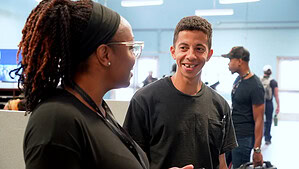
That culture showed up in tangible ways. Circle K hosted on-site job fairs at UMOM, hired program participants directly, and supported clients through resume building and mock interviews. “We hire right there,” Ramirez-Garsha said. “And we close the loop.”
Lopez emphasized that workforce development sat at the center of UMOM’s model. “Jobs plus housing works,” she said. “When someone has experienced trauma or been out of the workforce for a long time, having an employer who understands that makes all the difference.”
Both leaders closed the conversation with a shared call to action for 2026. Lopez urged nonprofit leaders to lean into conversations with corporate partners instead of defaulting to grant applications. “Ask what they need from you,” she said. “And tell them what you need. Don’t shy away from it.”
Ramirez-Garsha echoed that message. “Jump in. Get your employees involved. Make it part of your culture,” she said. “That’s how partnerships last.”